

Available 24/7 at
+86 13632816717

The Best FPGA Development Board 2026
The FPGA market is developing rapidly, driven primarily by the sustained demand for high cost-performance solutions, flexibility, and low power consumption. This guide combines FPGA industry trends in 2026, focusing on integration level, energy efficiency, and cost competitiveness, to help you choose the top FPGA boards in 2026.
FPGA (Field Programmable Gate Array) is a type of integrated circuit that can be configured and reprogrammed at the hardware level by the user. Unlike fixed-function ASICs, FPGAs can flexibly modify their internal logic structure according to different application requirements. As a result, they are widely used in communications, industrial control, consumer electronics, automotive electronics, artificial intelligence, and data center applications.

What are the advantages of FPGAs?
Reconfigurability
The greatest advantage of FPGA lies in its reconfigurability. Developers can continuously modify and upgrade hardware logic based on product requirements without redesigning the chip. This significantly shortens development cycles and reduces overall R&D costs. For products that require frequent iteration or long-term maintenance, FPGA offers clear flexibility benefits.
Parallel Processing
FPGAs have inherent parallel processing capabilities, allowing them to execute a large number of tasks simultaneously. This makes them highly effective in high-speed data processing, machine vision, communications, and real-time control applications. Compared to traditional CPU-based sequential processing, FPGAs deliver lower latency and better real-time performance.
Power Efficiency
In terms of power consumption, FPGAs are generally more energy-efficient than high-performance GPUs, making them well-suited for edge computing, IoT devices, and systems requiring long-term stable operation. In addition, FPGAs can be optimized at the hardware level for specific applications, achieving a better balance between performance and power efficiency.
Flexibility & Scalability
With a combination of performance, flexibility, and upgradeability, FPGAs are increasingly becoming an important computing platform between CPUs, GPUs, and ASICs. They are especially gaining traction in edge AI, industrial automation, and embedded systems, with expanding application prospects.
Core Components of FPGA Architecture
Configurable Logic Block (CLB)
The Configurable Logic Block (CLB) is the most fundamental logic unit inside an FPGA. It is used to implement combinational logic, sequential logic, and general digital circuits.
Digital Signal Processor (DSP) Block
DSP blocks are dedicated hardware units designed for multiply-accumulate operations. They are widely used for algorithm acceleration, image processing, and signal computation.
Block RAM (BRAM)
Block RAM (BRAM) is the high-speed on-chip memory within an FPGA. It is used to store data, buffers, programs, and temporary information during processing.
Input/Output Block (IOB)
The Input/Output Block (IOB) serves as the external interface of the FPGA, supporting different voltage standards and enabling connections with external devices and peripherals.
Transceiver
Transceivers are used for high-speed communication and support high-bandwidth data transmission interfaces such as Ethernet, optical communication, and serial connectivity.
Clock Management Unit (CMU)
The Clock Management Unit (CMU) provides clock division, frequency multiplication, phase-locked loop (PLL) functions, and global clock distribution networks for the FPGA system.
Interconnect Routing
Interconnect routing resources connect all internal FPGA modules together, enabling signal transmission and communication between different functional blocks.

Applications of FPGA in Emerging Technologies
In the industrial sector, FPGAs can efficiently handle video and image processing tasks, and also meet the requirements of logic control and high-precision computation in CNC machine operations, ensuring stable and efficient performance of industrial equipment.
In automotive electronics interface and control applications, FPGAs are widely used in electric vehicle motor control systems for driving and regulation. They can also interface with various in-vehicle systems such as driver assistance systems, instrument clusters, radar, and ultrasonic sensors, enabling coordinated control and data exchange across multiple onboard peripherals.
In the communications sector, FPGAs are capable of handling various communication protocol parsing as well as signal modulation and demodulation tasks. They support stable operation of wireless communication and data transmission services, meeting the requirements of high-speed data exchange scenarios.
In intelligent electronic products, FPGAs enable internal functional logic scheduling and real-time data processing. They help smart devices perform signal acquisition, functional control, and intelligent responses, improving operational efficiency and user experience.
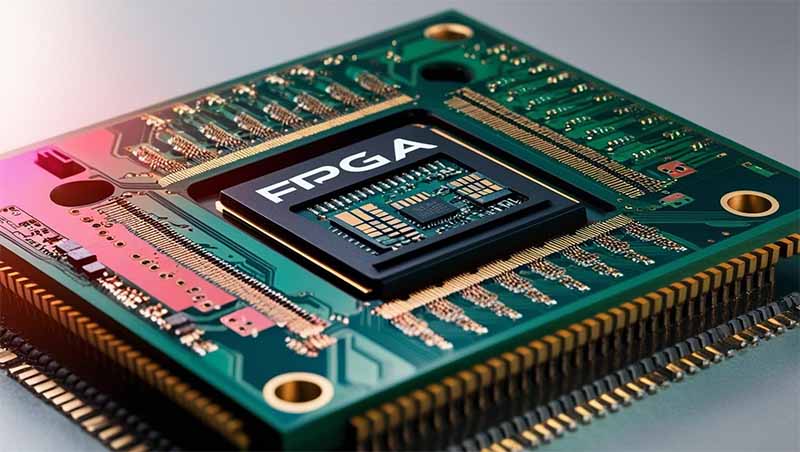
With the rapid adoption of artificial intelligence, the Internet of Things, and edge computing, the FPGA market in 2026 is entering a new growth phase. Compared to its traditional focus on communications and industrial control, FPGAs are now increasingly evolving toward low-power AI computing, real-time data processing, and flexible reconfigurable system architectures.
FPGA Market Growth and Trends in 2026 & Future
Continuous Market Demand Growth
In the coming years, the strongest demand for FPGAs will come from edge AI, industrial automation, intelligent vision, robotics, medical electronics, and IoT devices. These applications typically require real-time local data processing while maintaining low power consumption and stable operation. FPGAs are naturally well-suited for edge computing scenarios due to their inherent parallel processing capabilities and hardware-level real-time responsiveness.
Increasing Focus on Low Power and AI Performance
On the low-power side, manufacturers are continuously improving process nodes and power management technologies to make FPGAs more suitable for battery-powered devices, edge terminals, and long-term industrial systems. Low-power FPGAs are expected to become the mainstream in the future, especially in IoT and smart terminal applications.
Next-generation FPGAs are also incorporating more AI-optimized architectures, such as enhanced DSP capabilities, INT8 inference optimization, and dedicated AI engines, to improve image recognition, video analytics, and small-scale AI inference performance. Compared to GPUs, FPGAs are not designed for large-scale AI training, but they offer clear advantages in real-time inference and ultra-low-latency processing.
Continued Emphasis on Programmability
Programmability and reconfigurability remain the defining characteristics of FPGAs. Developers can flexibly modify hardware logic based on different application requirements without re-fabricating chips like ASICs. This makes FPGAs highly valuable in markets where rapid iteration and customization are required.
FPGAs also offer inherent parallel processing capabilities and deterministic low-latency performance, making them difficult to replace in areas such as industrial control, communications, machine vision, and high-speed data acquisition. For many real-time processing applications, FPGAs deliver more stable and efficient performance compared to CPUs and GPUs.
FPGA Future Applications Development
With the widespread adoption of 5G, the rapid advancement of artificial intelligence, and the acceleration of automotive intelligence, demand for FPGA technology is expected to continue growing. Applications in communication base stations, servers, smart terminals, IoT devices, and intelligent vehicles are steadily expanding their use of FPGA chips. At the same time, developments such as smart cities, AI acceleration, IoT edge computing, and 5G infrastructure will further drive the continued growth of the FPGA industry. In 2024, the market size is estimated to be between approximately 1.63 billion USD and 4.5 billion USD, and it is projected to reach 15.8 billion USD by 2033.
It is expected that by 2026, as market competition intensifies, pricing margins for FPGA manufacturers will gradually be compressed. Companies will increasingly rely on product integration capabilities and supporting technical services to build differentiated advantages. In the future, brands that focus more on low-power design and ease of development are likely to gain stronger competitiveness in IoT and edge computing applications. Meanwhile, new industry trends are also emerging, such as integrating embedded FPGA IP into ASICs to reduce overall system costs, as well as optimizing AI functionality for entry-level application scenarios.
The Best FPGA Development Board For Beginners
For FPGA beginners, the core focus should not be on maximum performance, but rather on whether the learning path is clear, whether the ecosystem is mature, and whether it is easy to achieve a first successful implementation.

The XC7A15T-1CSG324I is a low-resource device from the AMD Artix-7 series, positioned primarily for educational and basic experimental platforms. Architecturally, it is based on a 28nm process and uses the Vivado tool-chain, which is consistent with mainstream FPGA development workflows, ensuring no generational gap in the learning process.
Due to its relatively small logic resource capacity, this device is well-suited for understanding fundamental FPGA structures and design methodologies, such as combinational logic, sequential logic, finite state machines, and basic peripheral control implementations. Its lower system complexity allows beginners to complete a full design cycle without dealing with complex IP integration.
The XC7A100T-1FGG484I also belongs to the Artix-7 family but offers significantly larger resources, making it a typical mid-range FPGA configuration. In a learning path, it usually corresponds to the stage where users transition from basic experiments to system-level design.
Compared to the XC7A15T, this device supports more complex architectures, such as on-chip memory systems (Block RAM usage), soft-core processors (MicroBlaze), and external memory interfaces (DDR/Flash controllers). Therefore, it can be used not only for teaching purposes but also for prototyping embedded FPGA systems.
From a long-term learning perspective, this device is closer to real industrial development environments, and its development flow is largely consistent with high-end FPGAs, offering good technical continuity.
The EP4CE15F17I7N belongs to the Intel Cyclone IV series and is one of the most commonly used core chips in low-cost FPGA development boards. In terms of architectural generation, it is an earlier FPGA product, but it still holds significant value in educational and basic experimental scenarios.
Its main advantage lies in its low development barrier. The Quartus tool-chain is relatively straightforward, and there are abundant tutorials and development board resources available. As a result, it is more suitable as a transition platform from digital logic to FPGA design, rather than a long-term industrial development solution.
This device is typically used for fundamental digital system training, such as I/O control, simple communication protocol implementation, and display control, and it maintains a stable position within educational curricula.

What is the Best FPGA Development Board?
The best FPGA is determined by actual usage demands rather than fixed standards. Entry-level ones feature simple structure, sufficient basic logic resources and easy-to-use supporting tools, which are ideal for beginner learning and simple logic design practice.
Mid-range mainstream FPGAs own balanced computing performance, rich peripheral interfaces and stable operating performance, perfectly fitting most industrial control, image processing and ordinary embedded development scenarios.
High-end high-performance FPGAs are equipped with massive logic units, powerful dedicated computing modules and high-speed transmission ports, boasting strong parallel processing capacity, suitable for complex algorithm acceleration, high-speed communication and professional industrial high-precision research and development work.
So the most suitable FPGA that matches your project budget, development difficulty and functional requirements is truly the best choice.
Xilinx / AMD XC6SLX25-2FT256I
The XC6SLX25-2FT256I belongs to the Spartan-6 series and is a typical mid-to-low-end FPGA solution. It has been widely used in industrial control and basic logic processing applications over a long period of time. Its main advantage lies in a well-balanced resource configuration, achieving a good trade-off among LUT count, Block RAM, and I/O capabilities, while maintaining stable power efficiency performance.
Intel / Altera 5CEFA9F23I7N
The 5CEFA9F23I7N is part of the Cyclone V series and represents an important stage in the evolution from low-end FPGAs toward SoC-like integration. Compared to Cyclone IV devices, it offers significant improvements in power efficiency, logic density, and system-level integration capabilities.
This model is commonly used in industrial automation, video processing front-end systems, and embedded control applications, making it a widely adopted solution for cost-sensitive yet performance-demanding designs.
Microchip / Microsemi APA1000-CQ208M
The APA1000-CQ208M is a representative FPGA from the Microsemi (formerly Actel) family, known for its radiation-tolerant and high-reliability design characteristics. It emphasizes low power consumption and robust reliability rather than high-performance computing.
This device is widely used in aerospace systems, industrial safety control, and long-life-cycle mission-critical applications, where stability and reliability are more important than raw computational performance.
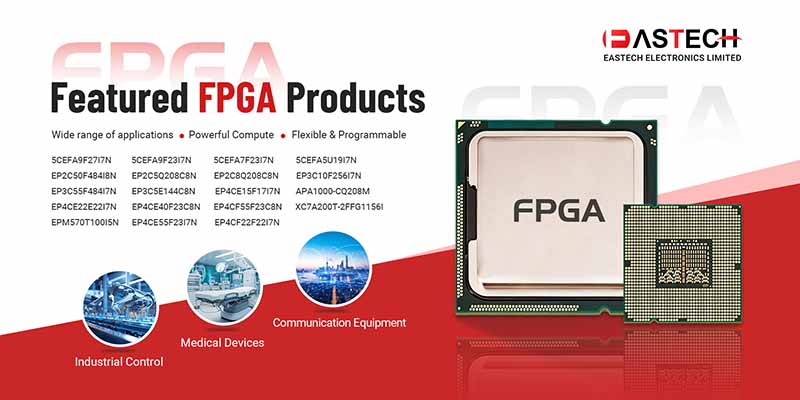
Eastech Selects the Best FPGA Development Boards
Based on FPGA industry application requirements, Eastech carefully selects well-known semiconductor manufacturers and a wide range of process nodes and performance tiers to present the best fpga development board 2026. It covers major brands including Xilinx/AMD, Intel (Altera), Microchip, and Marvell, encompassing legacy industrial-grade CPLDs, entry-level low-cost FPGAs, mid-range industrial control chips, high-end algorithm acceleration devices, and SoC heterogeneous architectures.
This selection balances multiple application scenarios such as learning and prototyping, consumer electronics, industrial automation, automotive electronics, and high-speed communications, meeting diverse design requirements from entry-level development to advanced engineering deployment.
XC2C256-7PQ208I
XC95216-10PQ160-I
XC95288XL-10TQ-144I
XC9536XL-10PC44C
XC9572XL-10-VQG64C
XC9572XL-10-VQG44C
XC9572-15-PCG44C
XC9572XL-10-TQG100C
XC95288XL-7PQG208I
XCR3128XL-7VQG100I
XCS10-3-VQ100I
XCS05XL-4
XC3S400A-4FTG256I
XC3S400-4PQG208I
XC6SLX16-3CSG324I
XC6SLX25-2FT256I
XC6SLX25-2FGG484I
XC6SLX45T-2CSG324C
XC6SLX150T-3FGG676I
XC7S15-1CPGA196Q
XC7S15-1CPGA196C
XC7S25-1CSGA225I
XC7A15T-1CSG324I
XC7A100T-1FGG484I
XC7A100T-2FG676I
XC7A200T-2FFG1156I
XA7Z010-1CLG225Q
XC7Z045-L2FFG900I
XC7Z035-L2FFG900I
XCKU040-1FFVA1156I
XCKU095-1FFVB1760C
XC5VSX50T-1FF665I
XC7VX690T-2FFG1927I
XCZU19EG-1FFVC1760I
XCZU3EG-1SFVC784I
DK-DEV-SCSXC6N-B
SK-KV260-G
Intel / Altera FPGA - Development Boards
5CEFA9F27I7N
5CEFA9F23I7N
5CEFA7F23I7N
5CEFA5U19I7N
EP2C50F484I8N
EP2C5Q208C8N
EP2C8Q208C8N
EP3C10F256I7N
EP3C55F484I7N
EP3C5E144C8N
EP4CE15F17I7N
EP4CF22F22I7N
EP4CE22E22I7N
EP4CE40F23C8N
EP4CF55F23C8N
EP4CE55F23I7N
EPM570T100I5N
Microchip / Microsemi / Actel
APA1000-CQ208M
Marvell
MV64560-A0-BEL1I166
Related information

- 2026.06.07 What Are NVIDIA Professional Gpus?

- 2026.05.26 Micron Memory and Storage for the Edge of AI
- 2026.05.08 Why Choose Micron Memory DRAM?